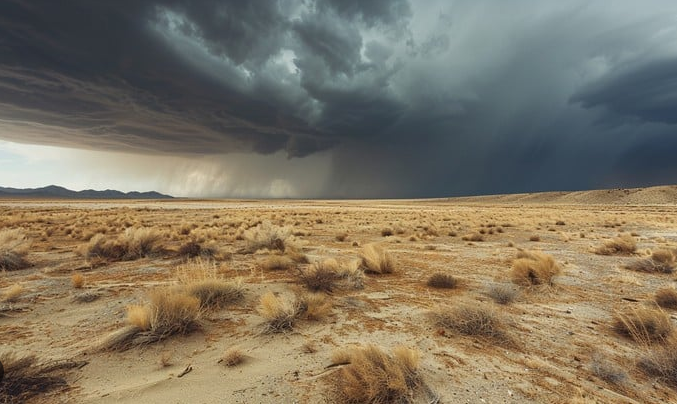
Rain has come to break this pernicious spell and disperse the hazy swelter we’ve worn like a hairshirt for weeks on end. Heavy and dense is the morning canopy that shields us from the vengeful sun. Even a brief reprieve is welcomed. A moment to breathe. A rejuvenating respite.
I love the rain. For reasons I could talk about all day. But right now, with the deep rumbling thunder still echoing in my ears, I’m thinking of “The Wasteland”. T.S. Eliot’s epic poem—a spiritual reflection on 1920s post-war ennui—feels like a chronicle of our own age. It’s every bit as prescient as Yeats’ “The Second Coming”, yet more visceral and unsettling.
The part of the poem that resonates with me the most (no pun intended?) is ‘What the Thunder Said’. In this final section, Eliot repeatedly uses the brash, monosyllabic word “DA” to elicit a sharp, sudden clap of thunder. This sound also evokes three Sanskrit words that draw together his closing argument.
Datta, dayadhvam, damyata—an instruction delivered in a Hindu Upanishad—mean give, sympathize, and control. It was the guidance imparted to Devas by Lord Brahma as the way to avoid war and achieve lasting peace. Eliot uses the words to onomatopoeiatically represent a grim warning from a grumbling sky.
As each command crashes down from the heavens, the author considers how his world has betrayed it. Little is freely given, he posits. Human relationships have become transactional and self-serving. Sympathy for others is illusive, as we have each isolated ourselves behind defensive ramparts, encasing ourselves in fortifications that double as prisons. And our control, referring to self-control, has eroded. Our “hearts would have responded.. to controlling hands” had we allowed them to. The waters were calm, but we were not.
When I hear the growing rolls of thunder that herald an impending storm, I often reflect on “The Wasteland”. I think of how the poem ends before the first raindrop falls. How the scorched, dying earth continues to ache for the cleansing deluge that waits on the horizon. The rain is not inevitable. The salvation of its baptism can only be realized when we recommit to the sacred precepts its roaring voice bellows over the land.
A reminder. An enticement. A warning. A promise. The thunder is all these things to me, thanks to Eliot. This morning, I am listening to the sky. Its message is crisp and unmistakable.
Datta. Dayadhvam. Damyata.
Give, sympathize, control.
 jericks
Leave a comment